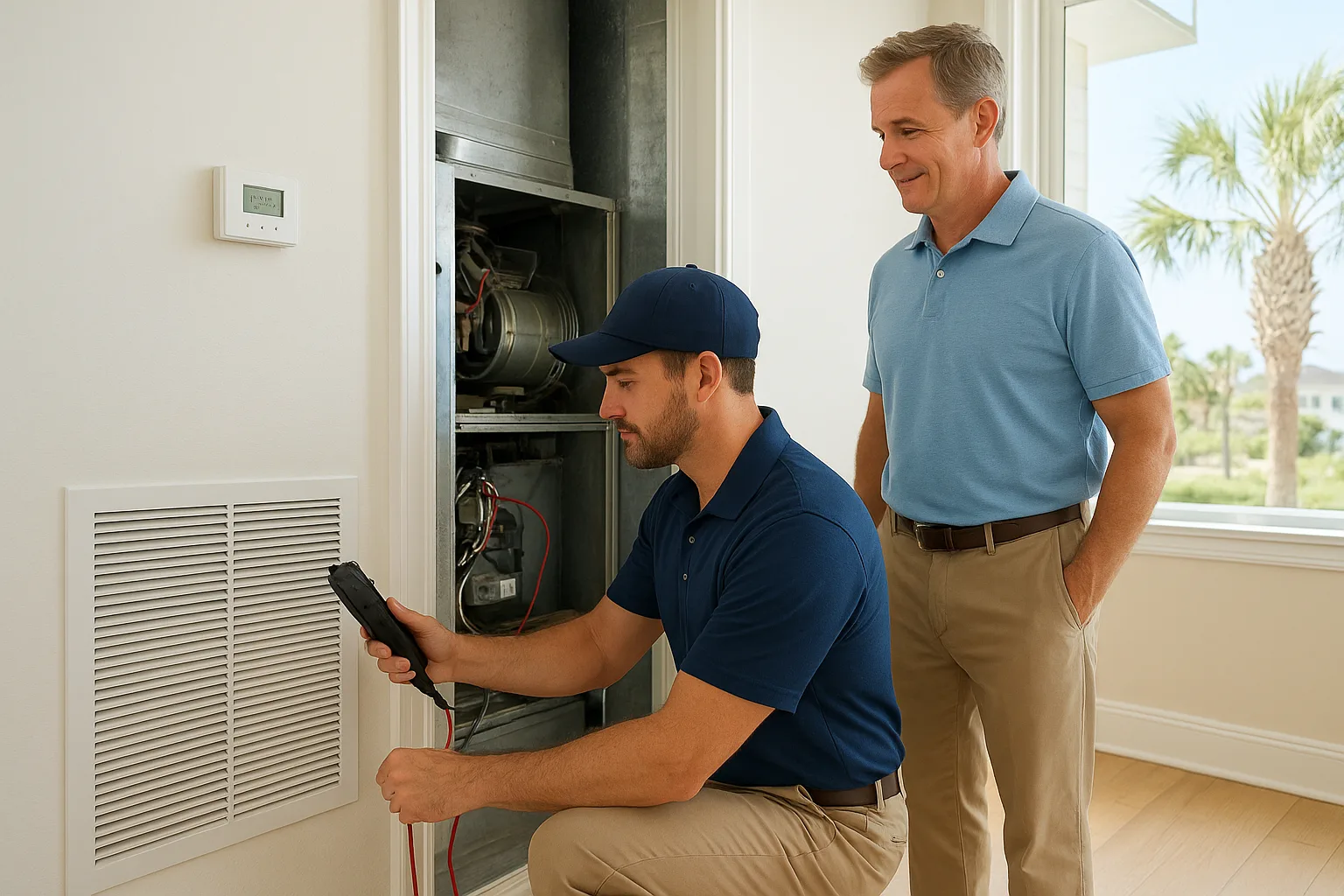
Why AC problems show up fast in Pensacola
In Pensacola, an air conditioner has to do more than keep the house cool. It has to run through long stretches of heat, high humidity, salt air, and sudden weather swings that can put extra strain on the whole system. That is why small issues often become noticeable quickly. A system that is barely hanging on in the Florida Panhandle may still turn on, but it may not cool evenly, remove humidity well, or keep energy bills under control.
For homeowners in Escambia County, the best time to think about AC repair is before the system quits on the hottest afternoon of the year. Many common problems start with subtle warning signs like weak airflow, strange noises, or warm air from vents. Catching those early can help you avoid bigger repair costs and more discomfort at home.
Common warning signs that your AC needs attention
Air conditioners usually give clues when something is wrong. The challenge is that many of those clues can seem minor at first. If you notice one issue more than once, or if several symptoms happen together, it is worth scheduling air conditioning service sooner rather than later.
Warm air from vents
If the thermostat is set correctly but the vents are pushing warm air, the system may be struggling with low refrigerant, compressor trouble, or airflow problems. Sometimes the issue is simple, such as a clogged filter or thermostat settings. Other times, it points to a larger cooling repair need. In Pensacola’s heat, even a short stretch of warm air can make the home uncomfortable fast. Homeowners in Pensacola often compare Indoor Air Quality Testing when they want a more focused look at repair or replacement options.
Weak airflow in certain rooms
Uneven cooling is a common sign of HVAC repair needs. If one room feels fine but another stays stuffy, the system may have duct restrictions, blower issues, or a dirty coil. Weak airflow can also make the unit work harder than it should, which increases wear over time.
Short cycling
Short cycling happens when the AC turns on and off too often without completing a full cooling cycle. This can be caused by thermostat issues, a frozen evaporator coil, electrical problems, or an oversized system. Besides being annoying, short cycling often leads to higher bills and more strain on parts that should last longer.
Frozen evaporator coil
A frozen evaporator coil is a sign that something is blocking proper heat transfer. Low refrigerant, dirty filters, airflow problems, or a failing fan can all be part of the problem. If you see ice on the indoor coil or refrigerant lines, turn the system off and call for AC service. Running it while frozen can make the damage worse.
Drain line clog
High humidity means your AC pulls a lot of moisture from the air, and that water has to drain away correctly. If the drain line clogs, you may notice water near the indoor unit, a musty smell, or even system shutdowns on some models. A drain line clog is easy to overlook, but it can cause water damage and encourage mold growth if ignored.
Strange sounds or smells
Grinding, rattling, squealing, or buzzing sounds usually mean a part is loose, worn, or failing. A burning smell can point to electrical trouble, while musty odors may suggest moisture buildup or a dirty system. These signs do not always mean a major breakdown, but they should never be ignored. If you want a more service-specific breakdown, Whole Home Dehumidifiers gives you the local details for Pensacola.
How Pensacola weather affects AC performance
Pensacola’s coastal environment creates a few extra challenges for home cooling systems. Salt in the air can contribute to coastal corrosion, especially on outdoor components that are already exposed to moisture and heat. Over time, corrosion can damage coils, electrical connections, and cabinet parts.
Humidity is another major factor. When the air is thick with moisture, your AC has to work harder to remove heat and water vapor at the same time. If the system is already underperforming, the house may still feel sticky even if the temperature is close to the thermostat setting. That is a sign the equipment may need maintenance or repair rather than just a lower temperature setting.
Storm season can also create problems. Power surges, debris, and heavy rain can affect the outdoor unit or expose weak points in the system. After a severe weather event, it is smart to check for unusual operation, tripped breakers, or drainage issues.
When a repair may be enough and when replacement should be discussed
Not every AC problem means you need a new system. Many homeowners only need a targeted repair such as replacing a capacitor, clearing a drain line, fixing a thermostat issue, or restoring proper refrigerant levels after finding the source of a leak. These repairs can bring comfort back quickly when the system is otherwise in decent shape.
That said, repeated breakdowns, major compressor failure, or extensive corrosion can make replacement a better long-term choice. A trusted technician should explain the age of the equipment, the cost of the repair, and whether the fix makes sense for your home and budget. The goal is not just to get the system running today, but to keep your cooling dependable through the rest of the season. For readers weighing next steps in Pensacola, Air Filtration and Purifiers is another useful service page to review.
What homeowners can check before calling for AC repair
Before you schedule service, there are a few simple things you can safely look at. These checks do not replace professional diagnostics, but they may help you describe the problem more clearly.
Check the thermostat
Make sure the thermostat is on cool, the temperature setting is below room temperature, and the batteries are working if your model uses them. Thermostat issues are common and can sometimes be mistaken for bigger equipment trouble.
Inspect the air filter
A dirty filter can reduce airflow and contribute to frozen coils, weak cooling, and short cycling. If the filter looks clogged, replace it and see whether performance improves.
Look at the outdoor unit
Make sure the outdoor condenser is not blocked by leaves, dirt, or overgrown plants. Good airflow around the unit matters, especially in hot, humid weather.
Check for water near the indoor unit
Standing water may point to a drain line clog or another moisture issue. If you see active leaking, turn the system off and schedule service promptly.
Why local AC service matters
When you need air conditioner repair in Pensacola, local experience matters. A technician who works in the Florida Panhandle understands how humidity, corrosion, and heavy summer use affect residential systems. That helps with faster troubleshooting and more practical repair recommendations.
Local homeowners often want the same things from an HVAC repair company: clear communication, honest diagnosis, and a solution that restores comfort without unnecessary work. Whether the issue is airflow problems, low refrigerant, or a failing component, timely service can help keep the system efficient and reliable.
Schedule help before the next hot spell
If your AC is making unusual noises, blowing warm air, cycling too often, or showing signs of a frozen coil or drain line clog, do not wait for a full breakdown. A quick repair now can prevent a larger problem later and help your home stay comfortable through Pensacola’s hottest days.
For dependable AC repair in Pensacola and Escambia County, contact AC Repair in Pensacola or call (850) 258-3225 to schedule service.
Frequently Asked Questions
Common signs include warm air from vents, weak airflow, short cycling, frozen evaporator coil issues, odd noises, water near the indoor unit, and rising energy bills. In Pensacola, humidity and coastal corrosion can make these problems show up faster.
Yes. A dirty filter can restrict airflow, reduce cooling performance, and even contribute to a frozen evaporator coil. Replacing the filter is a simple first step before scheduling service.
That is called short cycling. It can happen because of thermostat issues, low refrigerant, airflow problems, or electrical trouble. It should be checked soon because it can wear down the system quickly.
It can be. Water near the indoor unit often points to a drain line clog or another moisture issue. If ignored, it may lead to water damage or mold growth, so it is best to have it inspected quickly.
Service Area
Need HVAC Help in Pensacola?
Call AC Repair in Pensacola or request service online.
Request Service